
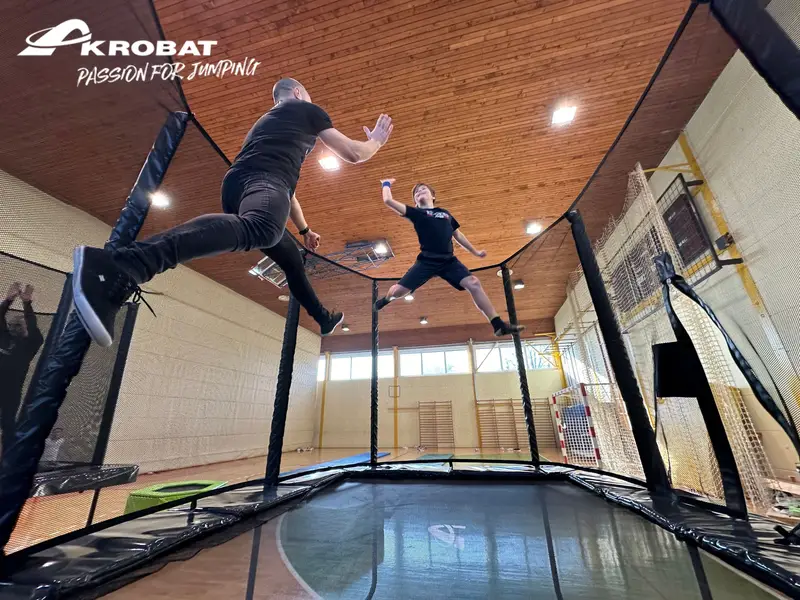
Trampolining improves hiking endurance, balance, and joint resilience. It burns calories like jogging, strengthens ankles, and reduces impact strain. Ten minutes of jumping equals 30 minutes of running, ideal for trail prep and injury recovery. Learn how to train smarter, not harder.
Many hikers spend their off-days logging miles on stair climbers, treadmills, or squats in the weight room. But there’s one tool that delivers better joint protection, superior balance training, and powerful cardiovascular benefits, without the wear and tear of traditional workouts: the trampoline.
In this guide, we’ll walk you through:
Let’s bounce into it.
Trampolining for Hikers: The Ultimate Trail Training Secret
Many hikers default to stair machines, treadmill inclines, or strength circuits to prepare for their next big trail. While effective, these methods can be punishing on joints, and they don’t always build the kind of balance and agility needed for unpredictable terrain.
Here’s the truth: there’s a better way. One of the most underrated tools for trail conditioning is sitting just a few feet above the lawn, (or in the ground flush with your yard) a trampoline. Whether you’re cross-training during the off-season or looking for a low-impact alternative to stair sprints, rebounding can elevate your trail readiness, build endurance, and protect your joints. It’s not just about bouncing, it’s about bouncing smarter.
Why Trail Hikers Should Train with Full-Size Trampolines
Many hikers stick to stair machines, pavement jogs, or weighted hikes when preparing for big elevation days. But few realize that training on a full-size trampoline, like an in-ground or above-ground model from Akrobat, offers a better return with less impact.
Benefits of Trampoline Training for the Trail
1. Builds Joint Resilience Without the Wear
Training on a full-size trampoline strengthens ankles, knees, and hips with low-impact movement. The bounce absorbs the shock, letting you train longer and recover faster. Many users report improved ankle control and fewer flare-ups, even after past injuries. It’s a smart replacement for intense stair sprints or weighted treadmill walks that punish your joints.
2. Improves Cardiovascular Efficiency
Interval training on a trampoline delivers excellent conditioning without overexertion. By alternating jump pace and form, hikers can simulate elevation spikes and push their heart rate into endurance-building zones. Over time, this boosts your VO2 max and stamina, without the wear and tear of pounding uphill on pavement.
3. Develops Trail-Ready Stability
Each controlled jump requires balance, core control, and joint coordination. Training this way on a full-size trampoline teaches your body to react quickly, crucial when navigating unstable surfaces or adjusting to a sudden shift in terrain.
4. Mental Clarity + Stress Relief
Jumping naturally lowers cortisol, increases dopamine, and helps recalibrate mental focus. Many of our customers use trampoline sessions as a post-work reset or as part of their active recovery from long trail weekends. Better sleep and better mood = better hiking performance.
Trampolines vs. Traditional Hiking Prep: Which Builds More Trail Power?

For hikers looking to build stamina, strength, and resilience, the usual advice is to climb stairs, walk uphill, or load up a pack and hit the treadmill.
But full-size trampolines, when used intentionally, can deliver many of the same trail-ready benefits, with less impact on your joints and greater activation of often-neglected stabilizer muscles.
Is Trampolining as Effective as Walking?
In many ways, yes, especially when you consider efficiency and joint preservation. Jumping on a full-size trampoline for 10 minutes delivers a cardiovascular workload equivalent to a 30-minute walk, while reducing joint stress by as much as 80%. That’s a major advantage for hikers managing chronic pain, recovering from injury, or just looking to train longer without the physical cost.
Unlike walking, trampoline movement includes vertical resistance. Every bounce forces your body to stabilize through acceleration and deceleration, something walking on flat terrain can’t replicate. This vertical loading not only builds power but also improves ankle and knee control, key to confident trail movement.
What’s the Real Calorie Burn?
A 30-minute session on a full-size trampoline can burn between 150 and 210 calories for the average adult. That’s on par with a three-mile run, but with far less perceived exertion and dramatically less joint fatigue.
More importantly, you’re engaging the entire body during every bounce. While walking primarily targets the lower half, trampolining recruits the core, arms, and stabilizers, resulting in a more efficient calorie burn and overall conditioning.
Does Trampoline Training Build Hiking-Specific Muscles?
Absolutely. Each jump activates the quads, glutes, calves, and core, the exact muscles used for climbing, descending, and lateral stabilization on rugged terrain. Trampoline workouts also develop fast-twitch muscle fibers, which are critical for reacting to sudden shifts in footing or elevation.
If your hikes include rocky trails, steep switchbacks, or technical descents, this type of explosive control matters. Training on a full-size trampoline builds both strength and reactivity without needing a mountain underfoot.
Weighted Training: Smart on a Trampoline?
Some hikers wonder if adding weight to trampoline workouts, such as wearing a backpack or vest, can mimic summit-day stress. The answer isn’t black and white. While weighted training has its place in trail prep, doing it on a trampoline requires caution.
What Hikers Are Asking
These are valid questions, and they come from hikers trying to push their limits intelligently. But the key is knowing when added load enhances training, and when it adds unnecessary risk.
Expert Insight
We strongly recommend mastering bodyweight trampoline workouts before introducing any external load. A quality in-ground or above-ground trampoline already delivers resistance through vertical movement and core activation.
Jumping with a weighted vest or pack may stress the spine, hips, and knees in ways your body isn’t prepared for, especially when working on an elastic surface. It also increases the chance of poor form, which can undo the very benefits you’re trying to gain.
If you’re determined to train with load, start off the trampoline. Use stairs or inclines with controlled pacing and well-fitted gear. Then transition back to trampoline sessions on off days to focus on recovery, stabilization, and low-impact strength.
Step-by-Step: Trampoline Workout Plan for Hikers
Week 1–2: Foundation & Balance
Start with 10 minutes per day of light, controlled jumping. The goal here is control. Focus on posture, ankle alignment, and soft landings.
Week 3–4: Build Endurance
Increase to 20-minute sessions. Alternate between quick, tight bounces and slower, deeper jumps. This mimics variable trail pacing and elevates cardiovascular output without joint fatigue.
Week 5–6: Hiking Simulation
Now layer in trail-specific movement. Begin integrating lateral and vertical challenges that mimic hiking dynamics.
Add-Ons
To enhance trail readiness, incorporate strength and control elements directly on the trampoline surface:
Unique Applications for Adaptive Hikers and Athletes

Full-size trampolines offer unique advantages for those navigating physical limitations. Whether for rehab or long-term training, trampolines provide a forgiving surface with a high return on coordination, strength, and confidence.
These applications reflect real-world use cases where bounce-based movement helps restore movement patterns and confidence.
When to Choose Trampolining Over Traditional Training
Here’s when training on a full-size trampoline offers a better alternative:
Whether you’re looking for trail-specific strength or just trying to stay ready between hikes, trampoline training offers a powerful way to move without compromise.
Bounce Smarter, Hike Stronger
Trampolining is one of the most overlooked and high-impact training tools for hikers. Whether you’re trying to build stronger ankles, improve endurance, or train during the off-season, full-size trampoline workouts deliver results that traditional methods simply can’t.
From technical trail readiness to injury rehab and stamina building, trampoline training supports every phase of the hiker’s path. And the best part? You can build trail power in your own backyard, no gym required, no miles logged on concrete.
But hikers aren’t the only ones unlocking the power of controlled bounce.
Ready to Elevate Your Training?
If you’re serious about performance, whether on the trail, on stage, or in the studio, bounce-based conditioning is a game changer. At AkrobatUSA, we engineer elite-level trampolines designed for athletes, movement specialists, and everyday adventurers who demand more from their training tools.
Whether you’re prepping for your next hike or you’re a dancer working on control, strength, and spatial awareness, our trampolines are built to support your next breakthrough.
What Sets AkrobatUSA Apart?
Explore our collection of performance trampolines designed for real movement, not playtime. Start with AkrobatUSA’s pro-grade in-ground trampolines and take your conditioning to a new